Our Methods
Studying Two Brains at Once
How do our brains respond when we talk, play, and work together?
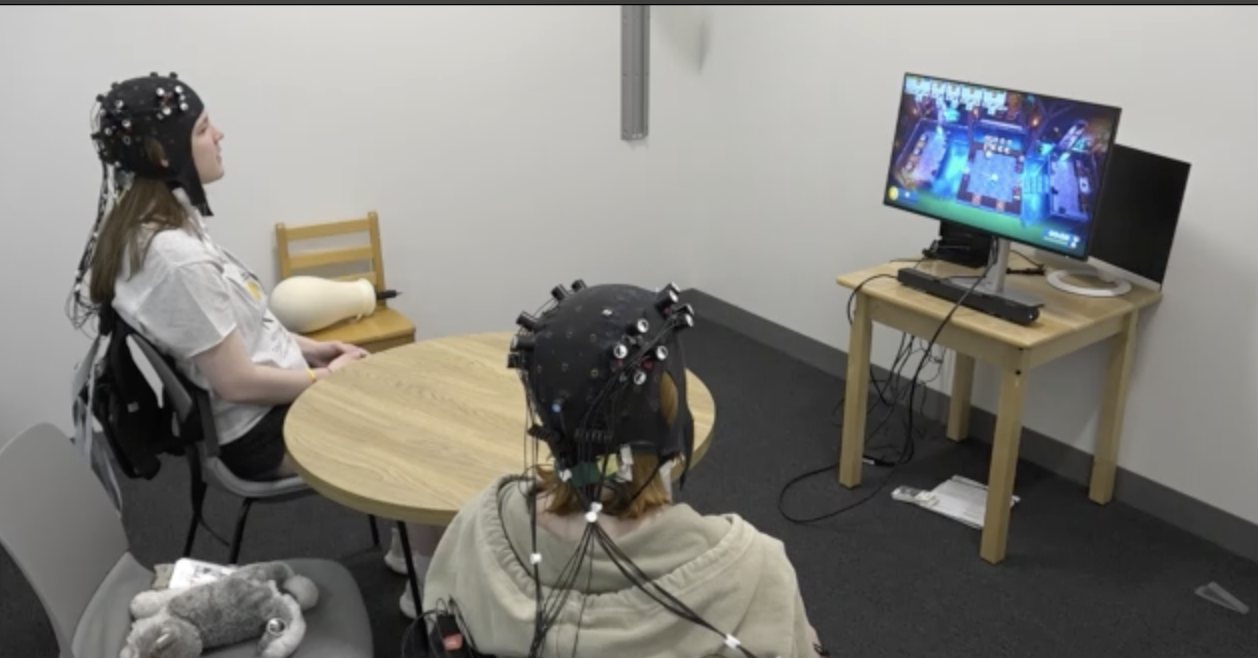
At CONNECT Lab, we use fNIRS hyperscanning to record brain activity from two people simultaneously during social interactions. Rather than studying individuals in isolation, this approach allows us to examine how brain activity unfolds across interacting partners in real time.
The Concept
What Is Hyperscanning?
Hyperscanning is a research approach that records brain activity from two or more people simultaneously. It allows us to examine how brain activity changes and becomes coordinated across individuals during social interactions.
Two Brains
Both partners wear fNIRS caps while their brain activity is recorded simultaneously, allowing us to examine changes in their signals over time.
Real Interaction
Participants can engage in everyday activities such as conversations, cooperative games, and collaborative tasks, making it possible to study social processes in more naturalistic settings.
Inter-Brain Synchrony
We examine inter-brain synchrony, the temporal alignment of brain activity across individuals, to understand when and how neural responses become coordinated during social interaction.
Why It Matters
Why Study Social Interaction with fNIRS?
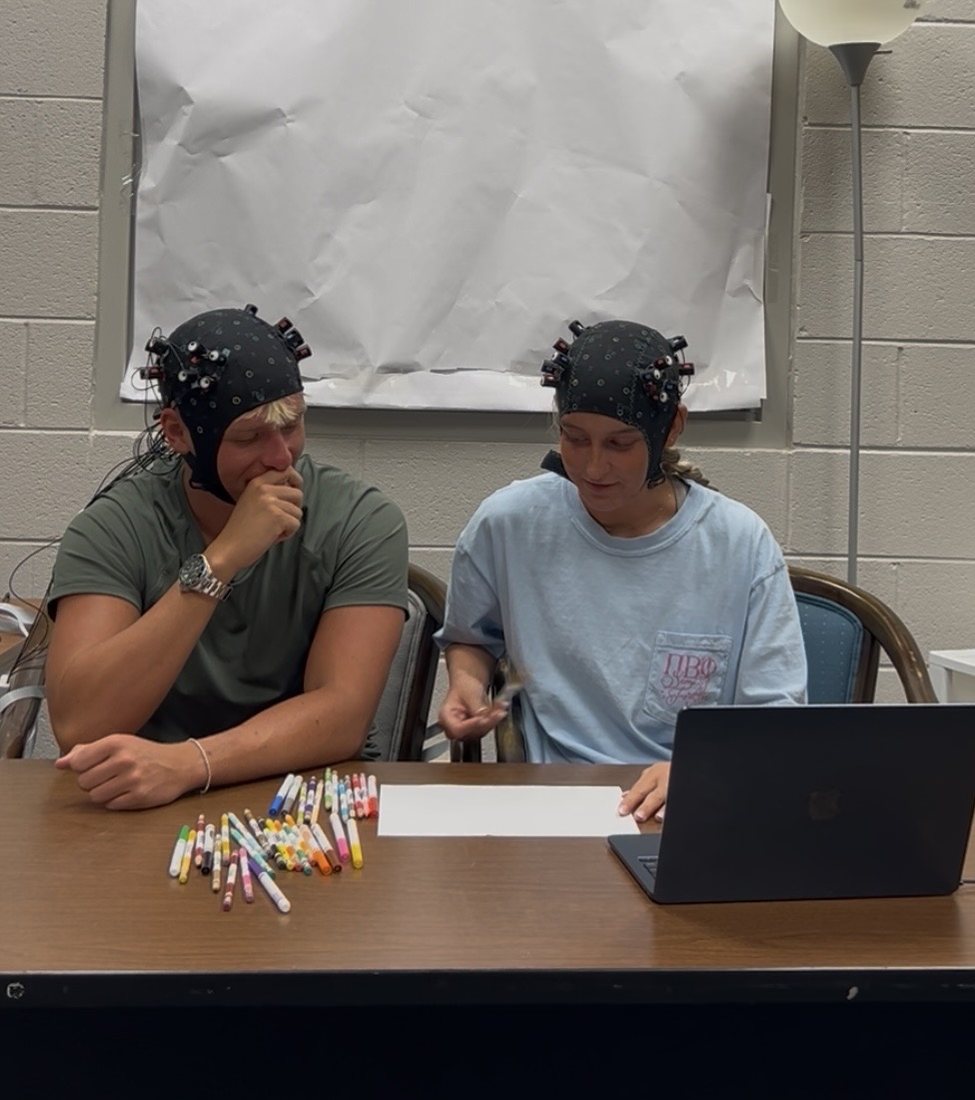
Many everyday social behaviors, such as talking, making eye contact, and gesturing, are difficult to study in a traditional MRI scanner, where participants must lie still in a confined space.
Functional near-infrared spectroscopy (fNIRS) offers a more flexible approach. Its wearable sensors allow participants to sit face-to-face, communicate, and engage in shared activities while their brain activity is recorded. This makes fNIRS particularly useful for studying social interactions as they naturally unfold, both in the laboratory and in everyday settings.
The Technology
How Does fNIRS Work?
Functional near-infrared spectroscopy (fNIRS) is a noninvasive neuroimaging technique that uses near-infrared light to measure changes in blood oxygenation in the outer regions of the brain. It uses low-power, non-ionizing light and is widely used in developmental research, including studies with infants and children.
Blood Oxygenation
When brain activity increases, local blood flow and oxygenation typically change. fNIRS measures these hemodynamic responses as an indirect indicator of neural activity.
Near-Infrared Light
Near-infrared light travels through the scalp and skull to reach the outer regions of the brain. Because oxygenated and deoxygenated hemoglobin absorb light differently, researchers can estimate changes in their concentrations.
Wearable Sensors
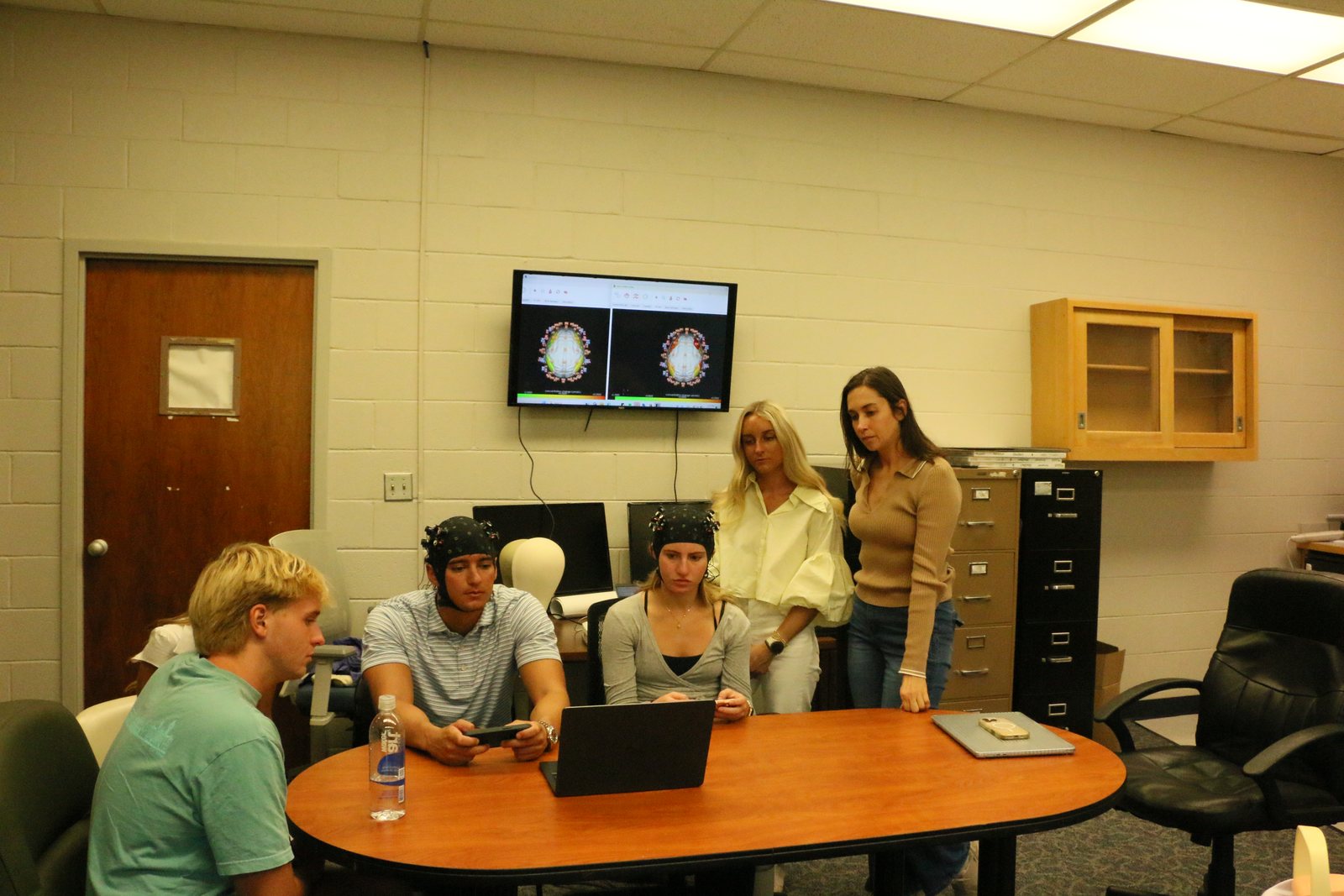
fNIRS sensors are placed on the scalp using a wearable cap. Unlike MRI, fNIRS allows participants to sit upright, communicate, and move more freely, making it suitable for research in laboratories, classrooms, and community settings.
Comparison
fNIRS and fMRI: Complementary Approaches
Both fNIRS and functional magnetic resonance imaging (fMRI) measure hemodynamic responses associated with brain activity, but each offers different advantages.
| Feature | fMRI | fNIRS |
|---|---|---|
| Brain coverage | Whole brain, including deep structures | Primarily superficial cortex |
| Spatial resolution | Generally higher | Generally lower |
| Movement | Requires substantial movement restriction | Allows greater movement, although motion artifacts remain a concern |
| Research setting | Specialized scanner environment | More flexible laboratory and community settings |
| Social interaction | Face-to-face interaction is difficult to accommodate | Well suited for face-to-face conversation and collaborative activities |
Neither method is universally better. fMRI provides more detailed information about activity across the brain, while fNIRS offers greater flexibility for studying brain activity during everyday behavior. At CONNECT Lab, we use these complementary approaches to investigate different aspects of social experiences and development.
Next Steps
Explore Our Research
Interested in how we use hyperscanning? Explore our ongoing research projects or get in touch to discuss potential collaborations and educational demonstrations.
For additional information about fNIRS, visit the Society for fNIRS.